Restoring Confidence. Revealing You.
Areola Restoration & 3D Areola
Restorative paramedical tattooing designed to recreate, restore, or refine the natural appearance of the areola after breast surgery, reconstruction, pigment loss or other changes.
Areola restoration can represent an important final step in a deeply personal journey. Whether an areola has been altered or lost following mastectomy, breast reconstruction, surgery, gender-affirming surgery, injury, or pigment changes, restorative tattooing can help create a more natural and balanced appearance.
At The Skin Restoration Room, every treatment is approached with privacy, precision, and individualized artistry. Color, size, shape, placement, symmetry, skin tone, existing anatomy, and your personal preferences are carefully considered.
The goal is not simply to create a tattoo. It is to create an areola appearance that feels appropriate for your body and your restoration goals.
Areola Restoration &
3D Areola
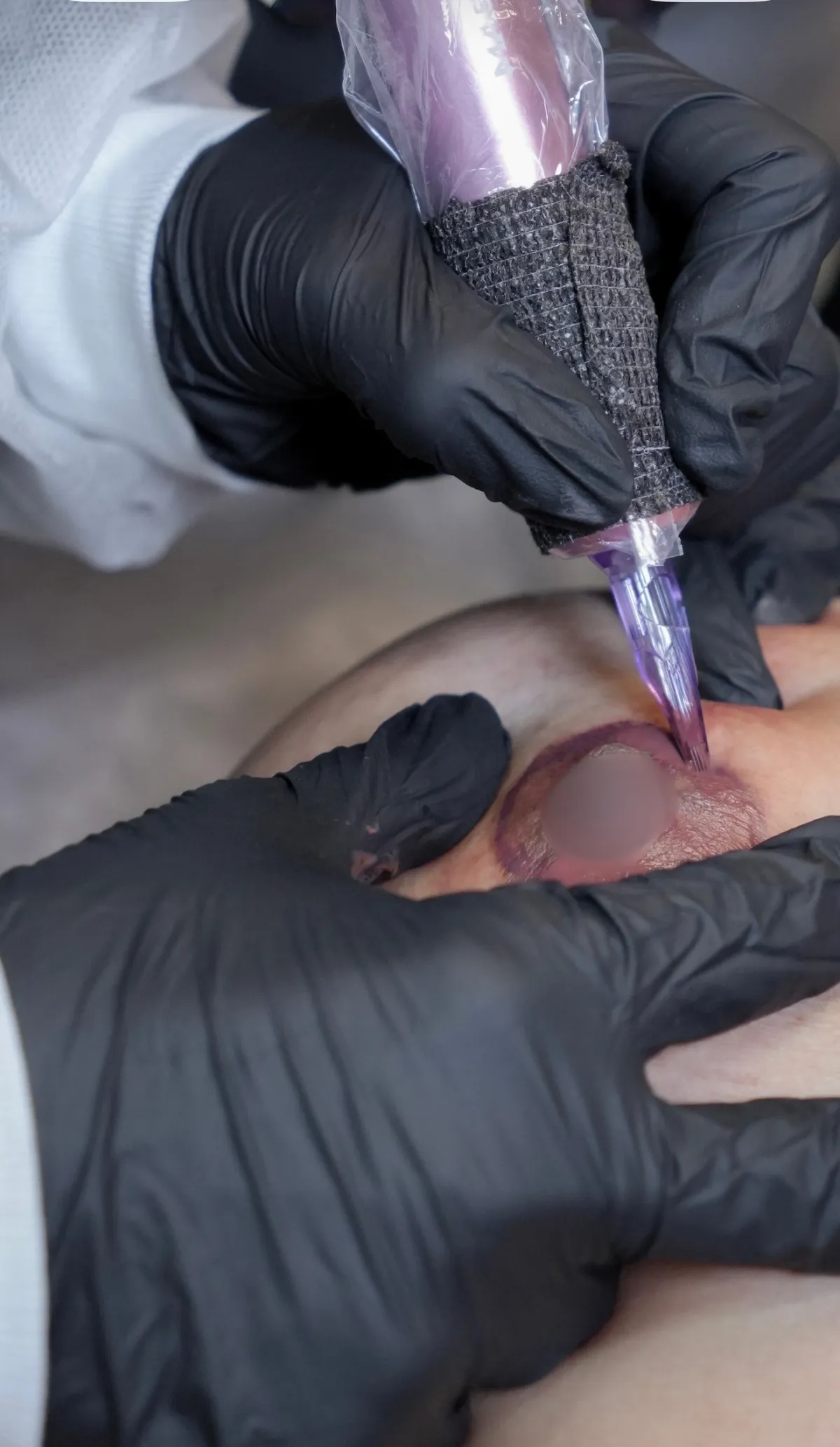
Areola restoration uses specialized paramedical tattooing techniques to restore existing areola pigmentation or create the visual appearance of an areola and nipple when anatomy has been altered or lost.
Advanced color blending, shading, highlights, and dimensional techniques can create a realistic 3D illusion while remaining completely flat to the touch.
WHAT WE OFFER
✦ 3D areola and nipple illusion
✦ Areola re-pigmentation following pigment loss or fading
✦ Unilateral or bilateral areola restoration
✦ Color and tonal refinement
✦ Visual symmetry and shape refinement
✦ Scar camouflage within or around the areola when appropriate
✦ Refresh or refinement of previous areola tattoo work
WHO MAY BE A CANDIDATE?
✦ Individuals who have completed breast reconstruction following mastectomy or other breast surgery
✦ Individuals with pigment changes following surgery, injury, or other causes
✦ Individuals seeking restoration or refinement of an existing areola
✦ Individuals seeking improved visual symmetry or color balance
✦ Individuals seeking correction or refresh of previous areola tattoo work
All genders and both unilateral and bilateral cases are welcome. Candidacy is determined individually after the area has healed sufficiently and treatment goals have been discussed.
Is My Areola Ready For Restoration?
Areola restoration is generally considered after the treatment area has healed sufficiently and the tissue has stabilized following surgery, reconstruction, injury, or other procedures.
During your consultation, we evaluate the skin and scar tissue, healing history, existing pigmentation, sensitivity, treatment goals, and any previous tattoo work.
Timing varies depending on the procedure performed and individual healing. Areas that remain actively healing, inflamed, open, significantly irritated, or otherwise unstable should not be tattooed.
When restoration follows breast surgery or reconstruction, medical clearance may be requested when appropriate.
Every case is evaluated individually. The objective is to begin treatment only when the tissue is ready and a thoughtful restoration plan can be developed.
What to Expect?
CONSULTATION
We begin with a private consultation to understand your history, healing, existing anatomy, previous procedures or tattoo work, and restoration goals. We evaluate the treatment area and discuss shape, size, placement, color, symmetry, and realistic expectations.
DESIGN & COLOR MATCHING
Your restoration is individually designed. Pigments are selected and blended with consideration for your natural skin tone, existing areola when present, surrounding tissue, and desired result. For unilateral restoration, the existing areola can help guide color, size, shape, and placement.
TREATMENT
Pigment is carefully implanted using specialized paramedical tattooing techniques. When creating a 3D areola, strategic color, shading, highlights, and detail are used to create the visual illusion of natural dimension while the tattoo itself remains flat.
HEALING
The treated area may initially appear darker, brighter, or more defined than the final healed result. Color typically softens as the skin heals. The final appearance should be evaluated only after adequate healing has occurred.
FOLLOW-UP
The treated area may initially appear darker, brighter, or more defined than the final healed result. Color typically softens as the skin heals. The final appearance should be evaluated only after adequate healing has occurred.
Understanding 3D Areola Restoration
WHAT DOES “3D AREOLA” MEAN?
A 3D areola tattoo uses advanced artistic techniques to create the visual illusion of an areola and projecting nipple on a flat surface.
Carefully placed highlights, shadows, color variation, texture, and fine details create the perception of depth and dimension. The result can appear three-dimensional to the eye even though the tattoo itself remains completely flat to the touch.
The design is customized to the individual rather than created from a standard template. Skin tone, anatomy, surgical changes, scars, symmetry, personal preferences, and—when present—the opposite natural areola are considered when developing the design.
The objective is a natural-looking restoration that complements your body rather than an identical or artificial-looking reproduction.
What Areola Restoration Can - and
Cannot - Do
Areola restoration can recreate or enhance the visual appearance of the areola, restore areas of lost pigmentation, improve visual symmetry, and create the illusion of dimension through specialized tattooing techniques.
It does not reconstruct breast tissue, physically create nipple projection, eliminate surgical scars, or restore sensation that has been altered by surgery or injury.
Scar tissue and reconstructed skin may retain pigment differently from unaffected skin, and individual healing responses vary. Multiple sessions may therefore be needed to develop and refine the result.
Pigment can also soften or change over time. Periodic refinement may eventually be desired.
Our approach prioritizes thoughtful design, realistic expectations, careful treatment, and a result intended to feel harmonious with your individual anatomy and restoration goals.
Frequently Asked Questions
How long after breast surgery or resconstruction should I wait?
The treatment area should be sufficiently healed and stable before restorative tattooing is performed. Healing timelines vary based on the type of surgery, reconstruction, complications, additional treatments, and individual recovery. We evaluate the area during consultation, and medical clearance may be requested when appropriate.
Do I need to have had a masectomy to receive areola restoration?
No. Areola restoration may be appropriate after mastectomy and reconstruction, but it may also be considered following other breast surgeries, injury, pigment changes, previous tattoo work, or other circumstances that have altered the appearance of the areola.
What is the difference between areola restoration and a 3D areola tattoo?
Areola restoration is a broad term that includes restoring or refining the color, shape, symmetry, or appearance of an existing areola. A 3D areola tattoo uses shading, highlights, color variation, and artistic detail to create the visual illusion of an areola and nipple with dimension when some or all natural anatomy is absent.
Is a 3D areola tattoo actually raised?
No. The tattoo remains flat to the touch. The three-dimensional appearance is an optical illusion created through carefully placed color, highlights, shadows, and detail.
Can you match my existing areola?
When one natural areola remains, it can serve as an important reference for color, size, shape, placement, and visual characteristics. The goal is natural-looking balance rather than a promise of exact duplication, since skin, scar tissue, pigmentation, and healing can differ between sides.
Can surgical scars be incorporated into the restoration?
In appropriate cases, scars within or around the areola area may be incorporated into the overall design or visually softened through pigment placement. Scar maturity, texture, color, location, and healing are evaluated individually before treatment.
How many sessions will I need?
More than one session may be needed. Scar tissue and reconstructed skin can retain pigment differently, and additional sessions may be useful for color adjustment, dimensional refinement, symmetry, or areas where pigment heals lighter than anticipated. Your treatment plan is individualized.
Is a patch test required?
A patch test may be recommended based on your skin characteristics, allergy history, sensitivity, previous tattoo reactions, treatment area, or other individual considerations. When recommended, the purpose and timing of the patch test will be discussed during your consultation.
What happens during my consultation?
Your consultation is private and individualized. We review your history, healing, treatment area, existing anatomy, previous tattoo work when applicable, and restoration goals. We also discuss design, color, symmetry, treatment expectations, healing, aftercare, anticipated sessions, and any questions or concerns before proceeding.
READY TO EXPLORE AREOLA RESTORATION?
Every restoration journey is different. Schedule a private consultation at The Skin Restoration Room to discuss your goals, have the treatment area evaluated, and explore an individualized approach to areola restoration.
Studio is located inside The Skin and Body Shop at:
8925 SW 148 ST, Ste, 218, Palmetto Bay, FL 33176
Tel: 305-747-7799 Call or Text


Copyright 2026 - The Skin Restoration Room - All Rights Reserved.