Restoring Confidence. Revealing You.
Stretch Mark Camouflage
Restorative paramedical tattooing designed to help mature, stable stretch marks blend more naturally with the surrounding skin.
Stretch marks are a natural response to changes in the skin and can develop with pregnancy, growth, weight changes, genetics, and other factors. Their color and texture can remain visible long after they have stabilized.
At The Skin Restoration Room, stretch mark camouflage is approached with careful assessment, individualized pigment selection, and realistic expectations.
Our goal is not to erase stretch marks. It is to reduce visible color contrast and help appropriate stretch marks appear more harmonious with the surrounding skin.
Stretch Mark Camouflage
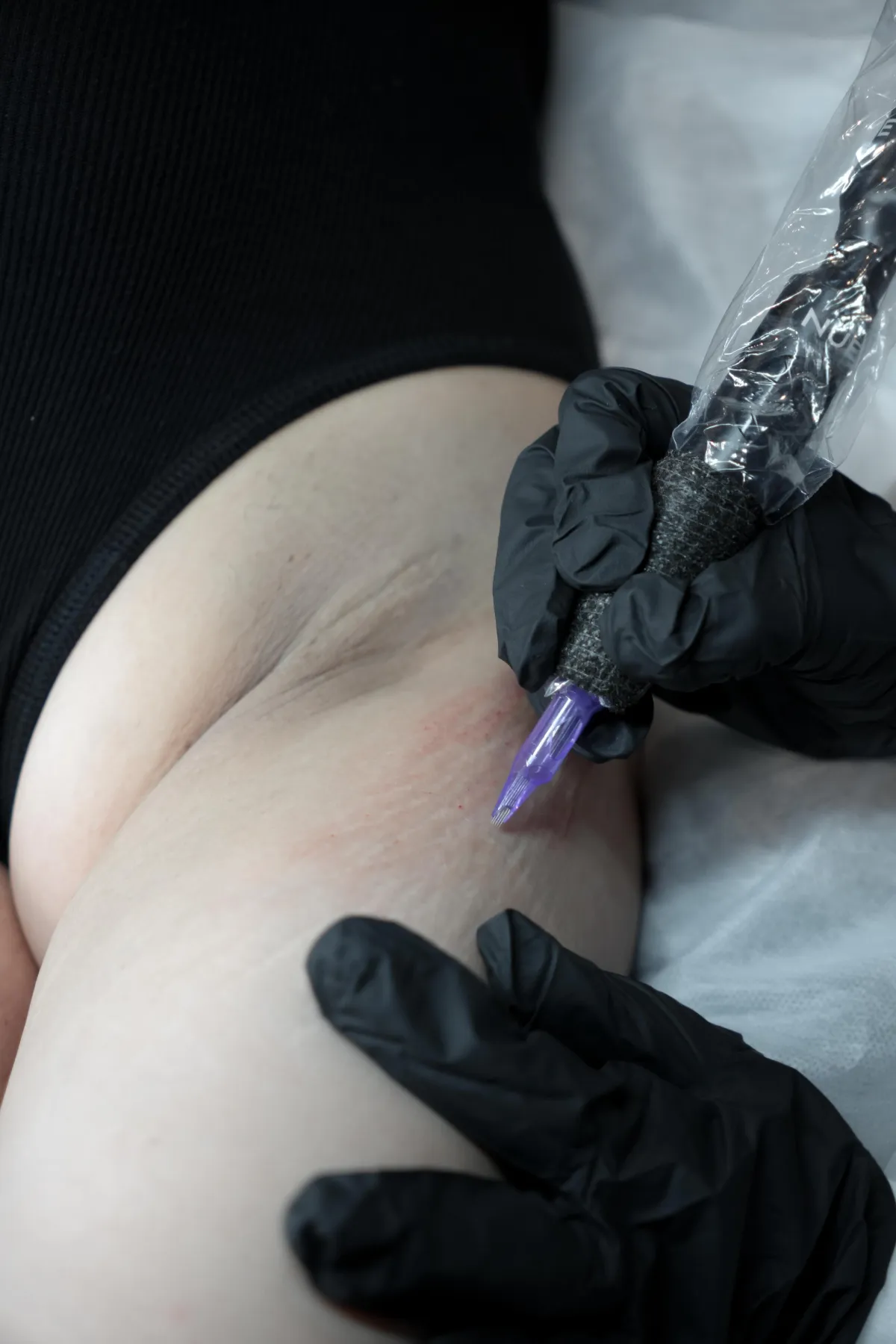
Stretch mark camouflage uses specialized paramedical tattooing techniques to introduce carefully selected pigment into appropriate mature, stable stretch marks. The objective is to reduce the visible contrast between lighter stretch marks and the surrounding skin.
WHAT WE EVALUATE
✦ Color and contrast of the stretch marks
✦ Age and stability of the stretch marks
✦ Texture and condition of the skin
✦ Treatment area and extent of coverage
✦ Natural surrounding skin tone
✦ Individual healing characteristics and treatment goals
WHO MAY BE A CANDIDATE?
✦ Clients with mature, stable stretch marks
✦ Stretch marks that are predominantly lighter or white/silver compared with the surrounding skin
✦ Clients who understand that camouflage improves visual blending rather than removing stretch marks
✦ All skin tones are welcome for individualized consultation
Each treatment plan is customized because stretch marks and skin tones vary significantly from person to person.
Is My Stretch Mark Ready For Camouflage?
Stretch mark camouflage is generally considered once stretch marks have matured and stabilized. During your consultation, we evaluate their age, color, texture, location, overall stability, and the surrounding skin before recommending treatment.
White, silver, or lighter stretch marks are often appropriate candidates for pigment camouflage because treatment can help reduce the contrast between the stretch marks and the surrounding skin.
Red, pink, or purple stretch marks are often considered less mature; however, color alone does not determine candidacy. Their age, stability, skin characteristics, and individual history are considered as part of the assessment.
Stretch marks that are actively changing, irritated, inflamed, or associated with an unresolved skin condition may require additional time or evaluation before treatment.
Every treatment begins with an individualized consultation because no two patterns of stretch marks—or skin tones—are exactly alike.
What to Expect?
CONSULTATION
We begin by evaluating your stretch marks, surrounding skin tone, treatment area, stability, healing history, and goals. We also discuss whether camouflage is appropriate and what you can realistically expect from treatment.
COLOR MATCHING
Pigments are individually selected and blended to visually coordinate with the surrounding skin. Because natural skin contains multiple tones and can change with sun exposure, the goal is visual blending rather than an exact permanent color match.
TREATMENT
Pigment is carefully implanted into appropriate stretch marks using specialized paramedical tattooing techniques. Treatment is performed strategically and conservatively to build a natural-looking result.
HEALING
The treated area will change in appearance throughout healing. Pigment may initially appear darker, warmer, lighter, or otherwise different from the final healed result. The true result should be evaluated only after the skin has had adequate time to heal.
FOLLOW-UP
Scar camouflage commonly requires more than one session. At follow-up, we evaluate healing, pigment retention, color integration, and whether additional refinement is appropriate.
What Stretch Mark Camouflage Can - and
Cannot - Do
Stretch mark camouflage does not remove stretch marks or restore the skin to its original texture. Instead, pigment is used to reduce visible color contrast between appropriate stretch marks and the surrounding skin.
The goal is for treated stretch marks to appear less visually prominent—not to make them disappear.
Results vary based on stretch mark characteristics, skin tone, texture, treatment area, pigment retention, healing response, lifestyle, sun exposure, and other individual factors. Multiple sessions may be needed, and pigment can soften or change over time.
Our approach is intentionally conservative: assess first, treat appropriately, and pursue natural-looking visual improvement rather than promise perfection.
Frequently Asked Questions
How old do my stretch marks need to be?
Stretch marks should generally be mature and stable before camouflage is considered. There is no single timeline that applies to everyone. During your consultation, we evaluate their age, color, texture, stability, and surrounding skin to determine whether treatment is appropriate.
Can red or purple stretch marks be treated?
Color alone does not determine candidacy. Red, pink, or purple stretch marks may indicate that the area is less mature, but their age, stability, skin characteristics, and history also matter. Each area is evaluated individually before treatment is recommended.
Will stretch mark camouflage make them disappear?
No. Stretch mark camouflage does not remove stretch marks or change the underlying skin texture. The goal is to reduce visible color contrast so appropriate stretch marks blend more naturally with the surrounding skin and appear less noticeable.
How many sessions will I need?
Most clients should expect more than one session. The number of treatments varies based on the treatment area, stretch mark characteristics, skin tone, pigment retention, healing response, and desired degree of refinement. Your treatment plan is individualized after consultation.
Can stretch mark camouflage be performed on all skin tones?
Stretch mark camouflage may be considered across a wide range of skin tones. Pigment selection and treatment planning are individualized because every skin tone, stretch mark pattern, and healing response is different. A consultation is required to determine suitability.
Will the camouflage pigment tan with my skin?
No. Tattoo pigment does not tan like natural skin. If the surrounding skin becomes significantly darker or lighter with sun exposure, the contrast with the treated stretch marks may temporarily become more noticeable. Consistent sun protection helps maintain a more balanced appearance.
How long does stretch mark camouflage last?
Stretch mark camouflage is a form of cosmetic tattooing, but pigment can gradually soften or change over time. Longevity varies with skin characteristics, treatment area, sun exposure, lifestyle, healing, and other individual factors. Periodic refinement may eventually be desired.
Is a patch test required?
A patch test may be recommended based on your skin characteristics, allergy history, sensitivity, previous tattoo reactions, treatment area, or other individual considerations. When recommended, the purpose and timing of the patch test will be discussed during your consultation.
What happens during my consultation?
We evaluate your stretch marks, surrounding skin tone, treatment area, stability, healing history, and goals. We discuss candidacy, realistic expectations, pigment camouflage, possible patch testing, anticipated sessions, healing, aftercare, and your questions before developing a treatment plan.
READY TO FIND OUT IF STRETCH MARK CAMOUFLAGE IS RIGHT FOR YOU?
Every pattern of stretch marks is different. Schedule a personalized consultation at The Skin Restoration Room to have your skin evaluated and discuss whether camouflage may be appropriate for you.
Studio is located inside The Skin and Body Shop at:
8925 SW 148 ST, Ste, 218, Palmetto Bay, FL 33176
Tel: 305-747-7799 Call or Text


Copyright 2026 - The Skin Restoration Room - All Rights Reserved.